
I have to admit, even though I regularly attend and review movies and theatrical productions, unless something is earmarked as a musical, I am not usually focused on the music. Perhaps it is because so many movies nowadays rely on commercial tunes that it doesn’t register in my head when an instrumental pieces comes up as background music.
WA Symphony Orchestra (WASO) At The Movies has changed that for me.
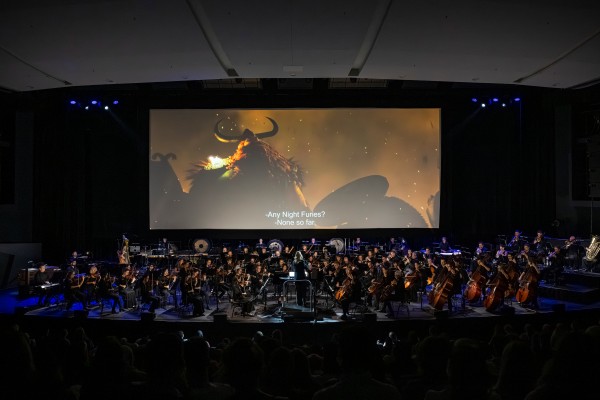
Photo credit: Artshoot Media
While my intention was to bring my son for his first experience of the orchestra, I was equally awed. Conductor Jessica Gethin seamlessly led an orchestra of 84 musicians who collectively played over 400 pages and 1.5 million notes over 2 hours. So regardless of your musical background or inclinations, watching a talented ensemble set the scene for Berk and its legendary Vikings is mesmerising.
How to Train Your Dragon may be a children’s movie but it was a perfect choice to showcase the impact of a good score on one’s enjoyment of a movie. The highly acclaimed soundtrack by John Powell has received several award nominations including an Oscar nod for Best Original Score. For a soundtrack to be so well-regarded, it seems criminal for it to blend into the background even if soundtracks are built to accompany the narrative.
The opening number alone is a clear example of this. “This is Berk” flexes the complexity and malleability of the composer to switch gears to fit the scene. When we first fly into Berk, we have calm sweeping notes by the string instruments with the melodic whistles of the flutes imbuing a Celtic element to the scene. We know we are travelling to a faraway, mythical land. Then as the dragons enter, the tempo is upbeat and the brass instruments join in to signal the first shots of battle being fired. As the hulking Vikings make their screen presence, so too do the tubas. As the battle intensifies, more drums and even the cymbals join in.
This piece alone is a rich, complex blend that incorporates a multitude of instruments. Yet rewatching the movie on its own, you hardly notice them as they are muted behind the action.
This is the beauty of WASO At the Movies: the series brings the music to the forefront, heightening our senses and allowing us to gain a richer enjoyment of the movie without overshadowing what’s on screen.
In addition to this, it truly highlights the amount of work that goes into bringing the score to life. There are the musicians, laser-focused on their sheet music while deftly executing every note. Then there’s Gethin, who is flitting from section to section, coordinating her talents without dipping in energy. With so much work going into performing the piece live, it makes you wonder how many hours Powell spent composing, arranging and fine tuning the score.
This eye-opening look into the musical element of movies is a nice bonus to the sensory experience WASO At The Movies offers.
A caveat though: avid cinephiles will need to adjust their expectations with regards to the movie-viewing experience. While Riverside Theatre utilises high-definition projectors, the projection quality will differ from what viewers will see at the movie theatre. As there is also a bit of light coming from the orchestra pit, some of the darker images on the screen may appear a little backlit.
However, that is only a small “good to know” rather than a gripe. As long as the audience understands that audiovisual technology in the cinemas outpaces even the most modern event venues, this minor note will hardly impact the overall experience of the event.
That said, even the most advanced sound systems do not compare to seeing musicians play an epic score in perfect sync. As I mentioned earlier, the soundtrack of How to Train Your Dragon is particularly majestic and hearing it live heightens the sense of drama and adventure of the movie.
The only thing that would have further elevated the experience is if there was a segment dedicated to introducing the audience to the different instruments and the sounds they make. This would be especially beneficial for this movie, given that Powell’s score features a wide range of instruments, including less commonly known folk instruments such as hurdy-gurdys, dulcimers and penny whistles.
Gethin exuded a warm, welcoming personality during her introduction. I smiled hearing her talk about the music with such fondness. This affable persona combined with her extensive experience makes her a great person to walk the audience through the orchestra.
Aside from learning about the instruments, I think children would get a kick out of trying to pick out the different sounds during the event. In a time when the creative arts are struggling, any opportunity to build engagement with a young audience is a good investment for the arts’ survival. And it would run in line with WASO’s ethos to “Engage. Excite. Experience. Educate”*.
So while we could have had more “educate”, WASO At The Movies did a splendid job of fostering an interest in the arts. It certainly gave me a deeper appreciation for the soundtrack and I know that I will consider music differently the next time I’m at the movies. In fact, we enjoyed the WASO experience so much that we’ve booked a return flight to Berk next June.
Tickets are now on sale for the sequel, How to Train Your Dragon 2, which will run at Riverside Theatre on 11th and 12th June.
Editor’s Note: We have since heard from WASO, who confirmed that they run similar sessions with their Family and Education shows. This feedback has been passed on to the team for future events.