
xWhen 16 year-old Lesley Hornby from Neasden, London, stumbled into the modelling world, little did she know she would eventually reach icon status. Yet that is indeed what she achieved.
Asked if she considered herself beautiful, she said “Not really. At sixteen, I was a funny, skinny little thing. And then, suddenly people told me it was gorgeous. I thought they had gone mad.”
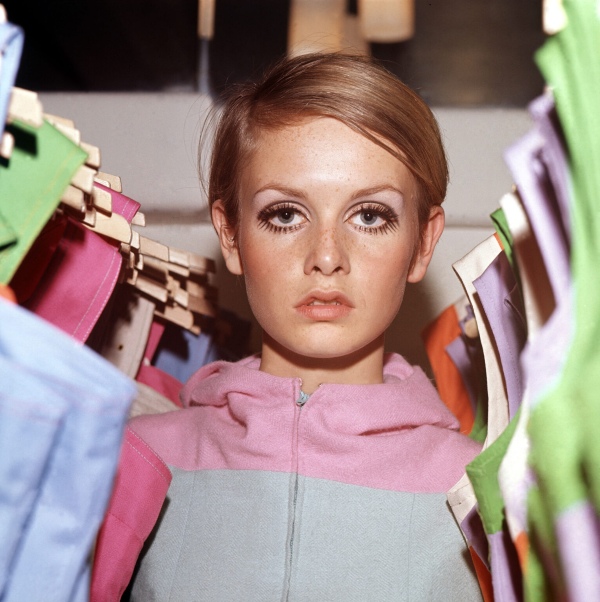
All lashes and legs, her iconic look was inspired by her ragdoll. A self-proclaimed “mod”, the creative teenager would layer three falsies on her top lash line and draw on the bottom one, giving herself the spiked eyelash look that she was famous for.
This documentary by Sadie Frost outlines Twiggy’s personal and professional life from the beginning of her celebrity status in 1966 to the present. With commentary from guests such as Joanna Lumley, Dustin Hoffman, Suzy Menkes as well as snippets from the Dame herself (she was appointed a Dame Commander of the British Empire (DBE) in 2019), the film provides us with intimate insight into not only her achievements, but her likeability.
Twiggy was the queen of reinvention. After leaving fashion at the age of twenty two, she moved on to movies, winning two Golden Globes for The Boy Friend. She then went on to receive a Tony nomination for George and Ira Gershwin’s Broadway musical My One and Only.
Twiggy later circled back into fashion, as a judge on Tyra Banks’ America’s Next Top Model. She also developed a long-standing relationship with British retailer Marks and Spencer, launching clothing collaborations and advertorials.
The most fist-pumping moment of the documentary for me was Twiggy’s infamous interview with the ever-misogynistic Woody Allen.
In an obvious attempt to belittle the then seventeen year old, Allen pelted her with “intellectual” questions. Presumably to prove that models are not intelligent.
He asked her multiple times who her favourite philosopher was, demanding specific names. Twiggy confidently pulled an “UNO reverse card” on him, asking “Who’s yours?”, and demanding that he name one instead. When Allen could not reply, the power dynamic shifted dramatically and he reportedly walked off the set.
It was clear even from her young age that there was a depth to her that was severely overlooked due to her looks. She was a revolutionary force, choosing to use her physicality to empower women instead of just for the pleasure of men.
Overall, Twiggy is a celebration of the magnanimous celebrity’s zest for life.
As Dustin Hoffman so aptly muses, “She lived to be alive and not successful. She’s so rare.”
Heartwarmingly genuine, and clearly loved by those close to her, I left the theatre with a newfound respect for this amazing woman.
Twiggy is now showing as part of the Russell Hobbs British Film Festival.