
(May contain spoilers, if one could possibly spoil a work written in 7th or 8th century BC.)
Adapting one of the greatest and most beloved literary works of all time was never going to be an easy feat. There have been many iterations of Homer’s The Odyssey over the years – yet Christopher Nolan’s genius gives this version something that sets it apart from all others: heart.
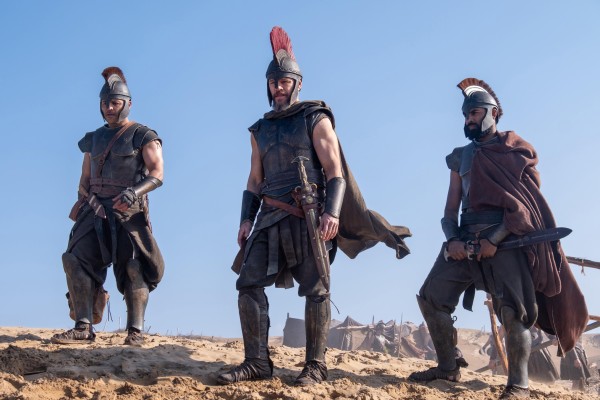
If you are looking for historical accuracy of the time period and something that stays true to the Ancient Greek 24-book poem, this is not it. The accents alone might take you out of the scenes – Nolan has purposely chosen a more modern, Americanised language for the film. I admit this was a rather unsettling directorial choice; however, I understand Nolan’s vision to use more accessible language, and to humanise the characters.
The costumes are not particularly elaborate either – also intentional on Nolan’s part. He opted for linens, patinated bronze and weather-beaten leather – more utilitarian than aesthetic. As the film’s costume designer Ellen Mirojnick said to Vogue magazine, “It was a world exhausted and haunted and salt-stained and fractured. Every costume had to carry the feeling.”
While Nolan took liberties with language and costume, historical accuracy was the aim with the film’s soundtrack. In a bold decision, Nolan and The Odyssey score composer Ludwig Göransson agreed to entirely omit the use of orchestras. They instead “looked to the ancient instruments” – Göransson using bronze gongs, and ancient Greek instruments such as the aulos (a double-piped reed instrument thought to exist in ancient Rome and Greece, depicted in many artworks and carvings of the time) and the lyre (a harp-like string instrument, the sound of which Nolan used to depict the sound of Odysseus’ bow) to achieve the desired score for the film. The distinctive timbre of Odysseus’ plucked bow serves as not only an effective leitmotif within the film, but in my opinion, a symbol of true triumph later on (not to give too much away). Truly iconic.
In a similar nod to modernising an age-old story, Nolan’s casting of rapper Travis Scott as the bard Phemius cleverly links ancient oral poetry to contemporary rap. Scott’s is the first voice heard in the film, setting up the epic narrative, as well as appearing on screen later on.
And then there is Nolan’s commitment to NOT using CGI. Using extensive animatronics, stunt doubles, and massive in-camera setups, he chose to ‘do things the hard way’, giving scenes an authenticity that could not be achieved through CGI alone. Knowing that the actors were in a built-to-scale Trojan horse, pelted relentlessly with sea water in the bitter cold while the scene was shot adds a visceral realness to the film. Similarly, the scene with the Cyclops, which was built using large-scale puppetry and animatronics, was shot in a real cave setting – a tricky feat on so many levels. Most impressive, though, is the scene in which Circe rearranges the soldiers’ faces into pigs. For context, the soldiers storm Circe’s cottage demanding food. Ravenous from their journey, they tear into the meat, “pigging out”. While they go feral, Circe kneads their faces and strokes their ears, moulding them into the animals she believes them to be. For this to be achieved only “with animatronics and clever camera angles” as explained to actors Tom Holland (Telemachus) and Anne Hathaway (Penelope) by Nolan, is truly mind-boggling – even they admitted that they could not comprehend how this was done – and they were there.
I could wax lyrical about Nolan’s directorial brilliance. However, what sets this version apart from all others is the humanising portrayal of The Odyssey’s characters. Take for example our introduction to Odysseus’ hunting dog Argos, whom he adopts as a cute newborn pup, in a bid to save it from getting tossed off a cliff. We realise the true depth of their bond as Argos clings to life well past his time, for 20 years, just for one last emotional reunion upon his master’s return, before passing peacefully – ever his faithful companion.
There is also the overarching theme of Zeus’ Law – where the rule of hospitality dictates that hosts must feed, shelter and respect all travellers, and that guests should respect their hosts in return. Of course, Odysseus has violated that law with his Trojan Horse stunt, and spends the rest of the movie drowning in his guilt, believing he has caused societal collapse.
And Athena (played by Zendaya) haunts his consciousness, a psychological manifestation of his overwhelming guilt. We realise it is this crushing guilt that causes his self-imposed exile, and not the monsters and trials he encounters on his way home.
Of course, it is impossible to expect a 3-hour long movie to include every step in detail of Homer’s Odyssey; stylistically, Nolan has chosen to either condense, omit or modify – and to great effect. But essentially, his message rings as true as Odysseus’ bow: that the truest way to tell a story – even one of gods and monsters – is with a very human heart.