
The Deb is based on the Australian musical of the same name. I have not watched the musical but Google indicates that reviewers were overwhelmingly enamoured by The Deb.
The storyline reads like a cross between the city mouse/country mouse dichotomy and a teen rom com.
Maeve (Charlotte MacInnes) is an overachieving, woke feminist of the future. She’s been kicked out of her fancy private school for protesting the school’s dress code. Her mother, the principal, decides to ship her off to her brother in Dunburn while she “fixes” the mess.
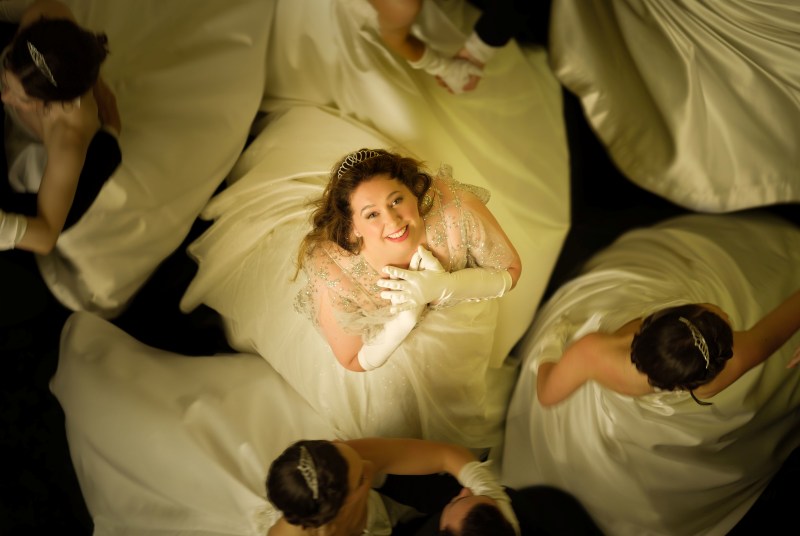
Dunburn, an outback town in the grip of drought, is in the thick of debutante season. Taylah (Natalie Abbott), Maeve’s cousin, is obsessed with “the deb”. She sees it as her time to blossom into a young lady.
Maeve is aghast by the idea of the deb. Unsurprisingly, she sees it as a backward country tradition and decides to create a podcast about it while helping Taylah.
Despite years apart, Maeve and Taylah develop a firm bond through the ups and downs of the pre-deb frenzy. This is reflected in the music which range from upbeat, girl-poweresque ensemble ditties to self-reflective numbers.
The movie features some incredible voice talent. This is definitely not a case of Pierce Brosnan singing in Mamma Mia. MacInnes, Abbott and Stevie Jean all have strong, beautiful voices which burst through the screen. Abbott’s voice is particularly melodic, her sweet voice a perfect fit for her virginal character.
The opening number “F*ck my life* is one of the catchier tunes, its unapologetically loud and brash tone setting us up for the tone of this movie. This is, truly, an ocker movie, so if you’re not comfortable with swear words being part of the casual vernacular, consider this your warning.
There are a few other poppy gems like “Someone Like Me” and “Pretty Strong” which showcase the leads’ vocals and duo harmonies splendidly. Stevie Jean’s vulnerable solo, with the slight rasp in her voice, also caught my attention.
However, something else that caught my attention was the one too many strong resemblances to Mean Girls.
Dunburn’s teenage population is ruled over by The Pixie Cups – a trio of popular girls who don’t discrimate against who to disparage. The leader of the group, Danielle, even comes with an overbearing, meddlesome mother.
The Pixie Cups also perform a mum-approved, cringey, oversexualised number at the agricultural market. This is very much a callback to The Plastics’ Jingle Bell Rock performance. As Maeve rightly observes, it is “the most problematic thing I’ve seen”.
The significant difference between The Plastics and The Pixie Cups is the respective mothers. Rebel Wilson’s Janette isn’t as passively desperate to be part of the hip crowd. She’s worse.
Janette is an aggressive stage mum who also happens to be the town beautician. She commands attention with her cocky audacity, she even has her own number during the movie.
The reviews for the theatrical production of Deb do not mention The Pixie Cups, so I’m unsure if they were added to the film. However, I do feel that the teenage power dynamics could have been conveyed without the need to heavily reference other popular works.
I also felt there were a few underdeveloped points throughout the movie.
The movie mentions that Dunburn is going through a drought. This is mostly talked about by the mayor and there is one shot of a very dry looking land. However, aside from these, we don’t really get the urgency of the situation. Yes, Dunburn is arid but the townfolk appear mostly unaffected by the drought.
Similarly, there’s a scene with the footy team which involves Taylah. It is a significant event, which you think would change the trajectory of the movie but it doesn’t. Everything goes back to the way it was.
One bright spot is the surprise cameo by the late Julian McMahon. It is not a big part but, without giving away too much, there are two references that only Australians will get in the two minutes he’s on screen. Similarly, there’s a dig at a group of old ladies’ scones, which I had a little chuckle at because only Australians would know exactly why it was such an affront to them.
There were so many opportunities for witty cultural references but these were drowned out by the crassness of the movie. Beyond the choice language, there are a couple of scenes that felt like they were included for shock value.
But was it unexpected, considering Wilson’s involvement in this movie?
The Deb is Wilson’s directorial debut. On paper, it sounds like the perfect fit. It is unabashedly blunt and undeniably Australian. It also harks back to Wilson’s breakthrough Hollywood role as Fat Amy in Pitch Perfect.
However, I wish that this milestone movie had more substance to be a memorable first for Wilson. For while this movie does have it moments (“F*ck my life” is playing in my head as we speak), I wouldn’t rush to label it an Australian classic.
The Deb opens in cinemas nationwide on 9th April.