
He was arguably the most controversial artist in history. In fact, he was so colourful (pardon the pun), his biography was pieced together mainly through police records. With a list of offences a mile long, including such gems as lobbing a plate of artichokes at waitstaff (not mentioned in the film, but fun fact) and, of course, the infamous murder charge that led him to flee Rome, Michelangelo Merisi da Caravaggio (1571-1610) is brought to life on film in this instalment of Exhibition on Screen.
Co-directed by award-winning filmmakers Phil Grabsky and David Bickerstaff, it not only showcases his work, but also dramatises the man himself, with the disclaimer “…Caravaggio was not a man of letters. The words he speaks here are imagined based on academic sources.”
Renowned not only for his contribution to the Baroque style, but also for his frequent brushes with the law, Caravaggio’s life is unravelled through police records, academic works and of course, his beautiful paintings in this documentary five years in the making.
We are taken on a tumultuous journey through his dark and tragic childhood in plague-ridden Milan, his eventual apprenticeship with a pupil of Titian, his propensity for socialising in taverns and his volatile temper leading to eventual murder.
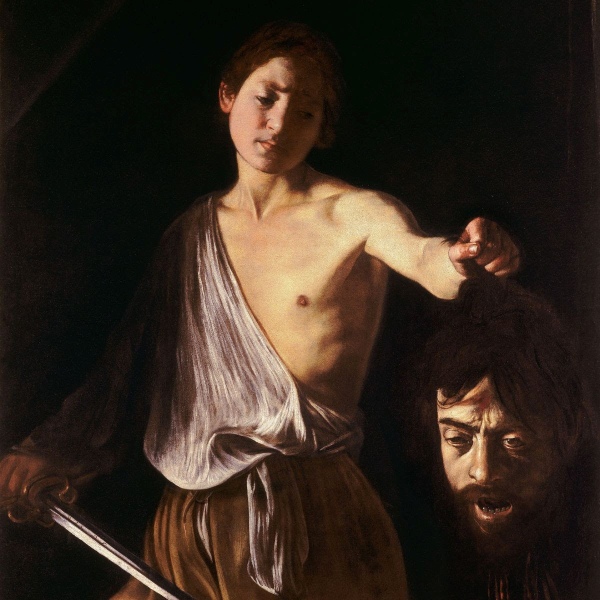
Of course, above all, his revolutionary work takes centre stage. His trademark use of chiaroscuro light, where the dramatic contrast between light and dark within the same painting creates a sense of intensity and tension, is apparent in his paintings.
Also, more controversially and to the chagrin of the church, was his penchant for painting commoners into his religious scenes. Imagine turning a courtesan into the virgin martyr Saint Catherine of Alexandria or even including a self-portrait in the Martyrdom of Matthew.
By far the most intimate insight into the man behind the brush ever made, I found this to be my favourite Exhibition On Screen instalment yet. I was captivated throughout from the detailed account of his fascinating life, work and death, and the commentary provided by the dramatised “Caravaggio” was quite entertaining. Essential viewing, not only for the art history enthusiasts, but especially if, like me, you watched Sleeper: The Lost Caravaggio earlier in the year, also screened by Luna Palace cinemas.
Exhibition On Screen: Caravaggio is screening at the Windsor.