
Edward is an up and coming writer based in Dublin. His recent book is receiving rave reviews and his publisher is having a field day. Edward is booked on multiple radio stations for interviews and a book tour to the United States is in the works.
There’s just one tiny complication: Alma.
Alma is Edward’s elderly mother. Widowed and suffering from the after effects of a stroke, she is fully dependent on Edward. Alma vehemently objects to the idea of a nursing home, even temporarily. So even though Edward has a brother, his status as a childless, gay man has made him the default carer.
Edward is left in an unenviable predicament: “abandon” mum to strike the iron while it’s hot? Or give up his dream and play the fillial son?
Before you answer, multiply that dilemma by four.
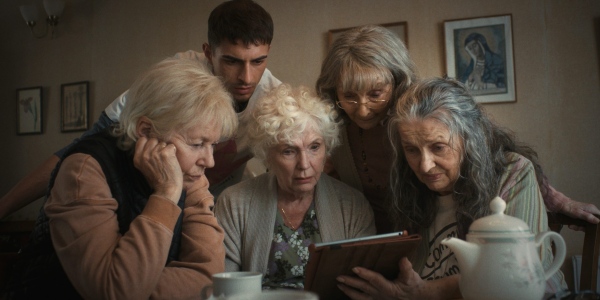
Unfortunately for our poor protagonist, his friends selfishly decide to dump their mothers on Edward with no prior warning.
Colm and Billy are also gay and also their mothers’ keepers. They claim carer’s fatigue and decide to relive their glory days at Maspalomas Pride.
This inspires a third friend, and Edward’s pro bono psychotherapist, Rupert, to drop his mother off at Eddy daycare. Rupert is a closeted gay man, stuck in a lavender marriage, who suddenly realises that he needs to go forth and explore his gay side.
None of them seem to realise the irony of leaving both their mothers with Edward.
But they all seem to have chosen the right person to step in.
Edward, played by James McArdle, is earnestly trying his best to help all these women. Despite his protests, he almost always acquiesces to their demands. Whether you think he’s a good guy or a patsy, McArdle has the role nailed in every weary sigh and strained facial expression.
But what I love most about this movie is that instead of crafting four doddering old ladies, director Darren Thornton has created a colourful collection of characters. Think of it as a geriatric Sex and The City.
Maude is the quiet peacekeeper who’s oddly invested in funerals. Rosie is the resident hippie, free-spirited and well-meaning. Jean is stoic and thoroughly unimpressed by well, everything.
Combine them with the short-tempered and strong willed Alma and you get enough bickering and badgering to drive any sane person off the deep end.
Thankfully, Edward has Raf and his bus to transport all the women in. Raf is Alma’s physiotherapist who also happens to be Edward’s ex.
So yes, the story has another complication. Personally, I don’t think the subplot is necessary for Raf’s character. Perhaps it provides some impetus for James to tackle life head on but it feels superfluous.
For as the movie progresses, we get to enjoy the subtle shifts in group dynamics. The ladies seem happy to have found their tribe and James, unsurprisingly, inherits three mothers.
I wasn’t a huge fan of the ending as I felt like there were loose ends that needed to be addressed. While I recognise that the three friends were mechanisms to bring the main plot to fruition, it would have been nice to flesh them out more. Similarly, while the ending was perfectly adequate, it seemed a little rushed into.
Four Mothers is now showing as part of the British Film Festival.