
Growing up in Singapore many moons ago, there weren’t many mainstream, popculture characters I could really identify with. I remember settling for identifying with any token “non-white” character as a child, so to see the diversity expand beyond the basic ethnicities and hone in on smaller populations really warms my heart. While we have seen a lot of Korean, Japanese and Chinese representation, South East Asian stories and characters are still under-represented. As happy as I was to have Crazy Rich Asians make its mark a few years ago, it didn’t feel completely representative of the Singapore I know and love.
Forgotten Island, on the other hand, is a win for South East Asian representation. The story is set in the Philippines and is voiced by Filipino talent. The setting, the characters and the myths are not dumbed-down for a non-Filipino audience to try to understand. It demands to be listened to on its own terms and consequently feels like authentic representation.
The party celebrating Raissa’s academic achievements was perfection. There’s mum showing off her daughter to fawning relatives, lechon has pride of place on the buffet spread, the kids call Jo “Aunty Jo” even though they are not actually related… and there’s karaoke! Chef’s kiss.
And the cherry on top? The casting of one of the pioneers of Filipino representation, Lea Salonga, as the fearsome villain, The Dreaded Manananggal. My only gripe is the lack of a full on, solo number for Salonga to showcase her legendary vocals.
Even though I am not Pinay, I am ecstatic for my Filipino brothers and sisters.
But beyond Forgotten Island being an absolute winner for representation, the movie shines on its own merits. Transport the setting to any other place in the world and it will still be one worth catching in the cinemas.
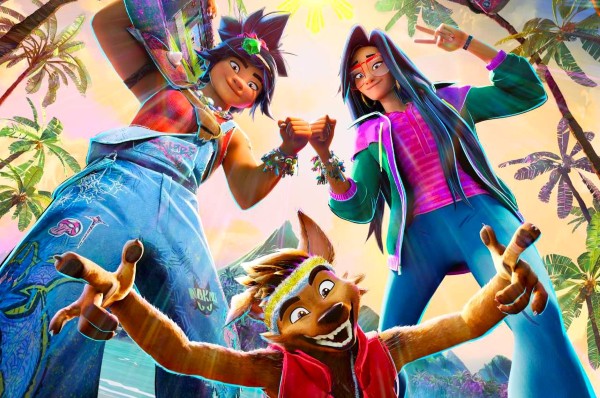
Forgotten Island follows the friendship of Jo (H.E.R) and Raissa (Liza Soberano). United by a reverence for the local folklore of the mystical island of Nakali and its inhabitants, the movie tracks their friendship from the day they first met as young kids. The girls are like chalk and cheese – Jo is a boisterous free-spirit who doesn’t really have a plan in life while Raissa is introverted, studious and clear on her goals post-high school. That doesn’t stop them from forming a sisterhood that lasts them through every milestone in their life.
Fast forward to post high-school – Raissa is leaving the Philippines for a prestigious placement at Caltech. A heartbroken Jo convinces her to go out for one last night on the town – only twelve hours later, they find themselves washed up on an unfamiliar beach… the shores of Nakali. With no recollection of what’s transpired in the hours before, they rely on Raww, a local half-human, half-canine creature, to retrace their steps and find the magical sand dollar that will transport them home. Along the way, they meet a bevy of memorable characters such as the ridiculously adorable Duwendes, Bungi an overgrown baby demon known as a Tiyanak and Mermahn, Prince of the Kataw merfolk.
Also memorable is the mixed 3d-2d aesthetics of the movie. One is almost reminded of Miles Morales’ Spiderverse series of movies, the main differences being that while the Spiderverse has a comic book feel to it, Forgotten Island leans more towards anime/manga including cutesy, oversized manga eyes. Additionally, Spiderverse leans more towards a darker colour palette while Forgotten Island spans the entire rainbow, depending on the scene. Scenes with Jo’s Lola carry a sense of nostalgia with warmer almost-sepia tones while scenes on Nakali are an explosion of colour. The screen goes menacingly dark in shades of black, red and purple when The Dreaded Manananggal appears. You would think the mix of colours would feel disjointed yet they work well to convey the vibes of the different setting.
Young kids will likely be scared by the elements of supernatural horror. Don’t be fooled into thinking that they will be able to stomach the movie because they liked K Pop Demon Hunters. The Dreaded Manananggal is a horrific creature who can split at the abdomen and darkens the screen almost every time she appears. In fact, many of the darker scenes have an explicit tonal shift which can be visually confronting. Additionally, the more mature language of the characters and “The Hangover” reminiscent antics, including impulsive tattoos, gear Forgotten Island towards pre-teenagers and older audiences.
Forgotten Island isn’t just a crowd pleaser for its target audience; it carries a message that is so important for an age group where peer pressure is at its peak and feelings of self-worth fluctuate at the slightest touch. While Raissa is increasingly drawn to a life of practical, responsible adult decisions, Jo remains tethered to the stories she grew up on and is content to coast through life. Despite this fundamental difference in outlook, the girls remain deeply attached to each other, reminding audiences that even as we change while moving through adolescence, the memories we make define who we are and cement the bonds that are created. While there is tension because of their differences, both girls are committed to who they are and their friendship remains solid well into adulthood.
If you need to reinforce this message to your mini-adults, Forgotten Island serves as the cool aunty who counsels rather than the stuffy parent who preaches. Even if you have the most self-assured teenager out there, Forgotten Island will thoroughly entertain with its zany characters. It is a much needed mature movie option for the school holiday roster.
Forgotten Island is now showing in cinemas, nationwide.